
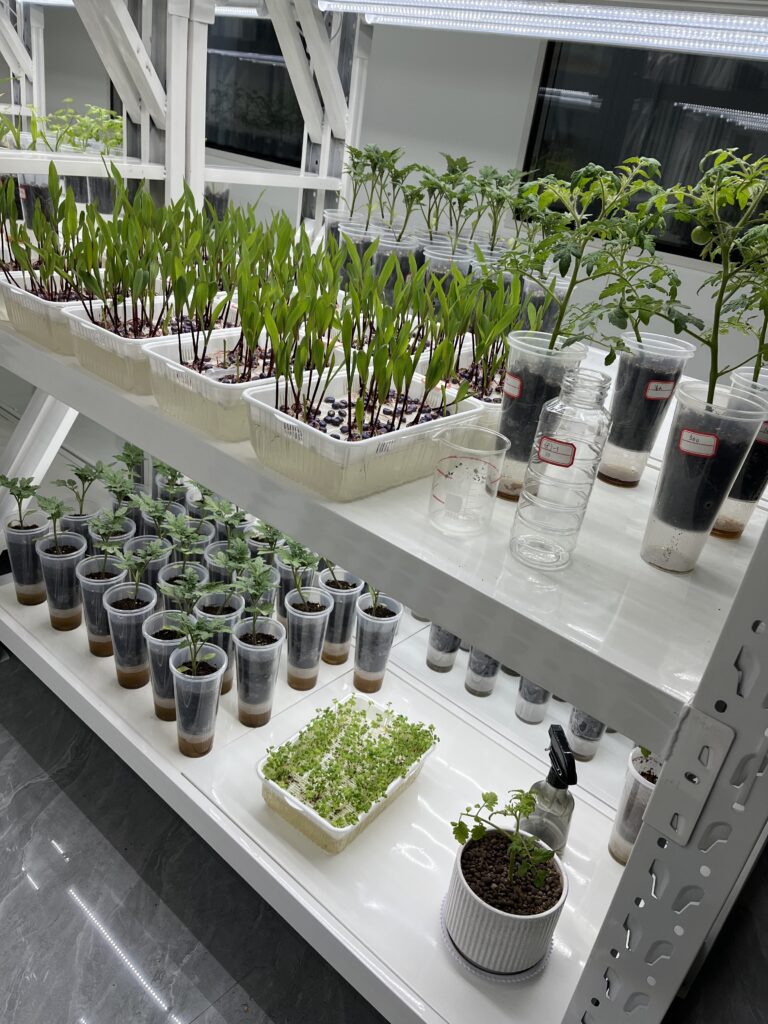
Two-part A+B nutrient systems are the backbone of commercial hydroponics. They look simple — two bottles, two concentrates, one recipe — but the science behind them decides whether your crop thrives or slowly starves. This guide covers what A+B nutrients are, how NPK, EC and pH work together, and the mixing discipline that separates professional growers from everyone else.
What Are A+B Hydroponic Nutrients?
A+B systems split the nutrient formula into two concentrated parts so that calcium and phosphates never meet in concentrate form. When concentrated calcium meets concentrated phosphate or sulfate, they precipitate into an insoluble salt your plants can no longer absorb. Part A typically carries calcium, nitrate nitrogen and chelated trace elements; Part B carries phosphates, sulfates and the remaining macro elements. Mixed in the correct order into the irrigation tank, they form a clear, stable solution.
Trelfey’s Hydroponic Nutrient A+B Fertilizer is formulated with an N-P-K of 9-8-30 plus calcium (CaO ≥ 10%), magnesium (MgO 2%) and chelated trace elements (TE 0.3%) — a high-potassium balance suited to fruiting crops, leafy greens and flowering ornamentals grown in soilless media.
NPK in Hydroponics: What Each Element Actually Does
- Nitrogen (N) drives vegetative growth, leaf expansion and protein synthesis. Young leafy crops and seedlings need higher N.
- Phosphorus (P) powers root development, flowering and early fruit set. Switch to higher-P formulas during the transition to flowering.
- Potassium (K) controls fruit quality — size, sugar, firmness, shelf life — plus water regulation and disease resistance. Fruiting crops like tomato, pepper and strawberry demand high K during fruit fill.
The right ratio depends on the crop stage: vegetative growth favours balanced or N-leaning formulas, while flowering and fruiting favour P- and K-leaning ones. A 9-8-30 + Ca + Mg + TE balance covers most commercial programs when combined with a stage-based feeding plan.
EC: Measuring Total Nutrient Strength
EC (electrical conductivity) tells you how much dissolved mineral is in your water. Too low and plants starve; too high and roots burn. General target ranges for common crops (in mS/cm):
- Leafy greens & herbs: 1.2 – 1.8
- Strawberry: 1.5 – 2.0
- Cucumber: 1.7 – 2.5
- Tomato: 2.0 – 3.5
- Pepper: 2.0 – 3.0
Start at the low end for seedlings and raise EC gradually as plants mature. Always measure EC after mixing A and B, and remember that your source water’s own EC counts toward the total.
pH: The Second Dial
Nutrients are only available to roots within a narrow pH window — roughly 5.5 to 6.5 for most hydroponic crops. Outside that range, iron, manganese and phosphorus become locked up even though they are present in solution. Check pH daily: it drifts upward as plants absorb nitrate, and downward with some fertilizers. Use pH-down (phosphoric or nitric acid) and pH-up (potassium hydroxide or carbonate) in small, staged adjustments.
How to Mix A+B Correctly
- Fill the tank with water and measure its starting EC and pH.
- Add Part A first, stir thoroughly.
- Add Part B second, stir thoroughly.
- Wait 5–10 minutes, then re-check EC and pH and adjust.
Never pour the concentrates directly onto each other, and never add A and B simultaneously into a dry tank — that is how calcium phosphate precipitates and how clogged drippers are born.
5 Common Mistakes in Hydroponic Feeding
- Mixing order wrong — A and B concentrates meeting directly cause permanent precipitation.
- Ignoring source water — hard water already contains calcium and carbonate; adjust your recipe or use RO water.
- EC drift without action — plants drink water faster than nutrients, so EC climbs between refills; top up with plain water and re-dose.
- pH swings — testing once a week is not enough; daily checks prevent lockout.
- Using stale stock — diluted solutions degrade; store concentrates properly and rotate stock.
Choosing a Hydroponic Nutrient Supplier
Consistency is everything in soilless farming — a batch that varies by a few percent changes your whole feeding schedule. When evaluating suppliers, ask for a batch Certificate of Analysis showing actual nutrient content, chelation type and heavy-metal limits. Confirm the formula matches your crop program, and check packaging and MOQ against your production scale. Our full product range page walks through all 25 formulations if you are comparing options.
Ready to set up or scale your hydroponic line? Contact our export team for specifications, batch COA and factory-direct pricing.