
Eggplant high-yield secrets come down to two things: precise water management and disciplined pruning. Yield rarely depends on variety alone. It depends on how the plant is trained and how evenly it is watered through fruit expansion. This guide sets out both, stage by stage.
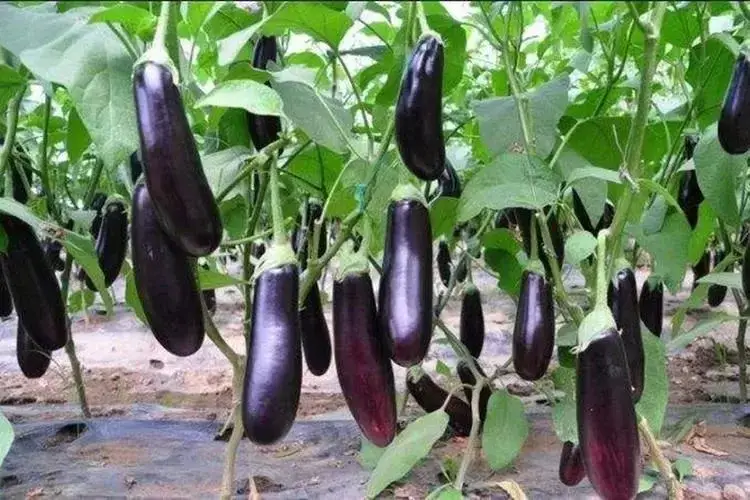
Eggplant High-Yield Secrets: Water Management by Stage
Water demand changes sharply as the plant develops. Match irrigation to the stage rather than running one fixed schedule.
Seedling stage. After sowing, drench the soil and cover it with a moisture-retaining film. Keep the bed damp. Once germination finishes, reduce water and switch to a dry-wet cycle, because constant moisture produces leggy seedlings. Before transplanting, water thoroughly to protect the roots.
Fruiting stage. When the first fruit sets, increase irrigation gradually and run drip or furrow water every 7 to 10 days. Peak demand arrives during fruit expansion at 3 to 4 cm. Two to three days before harvest, give a deep soak so the fruit fills out. This is also the window where a fruit-expansion fertiliser pays best: amino acid functional fertiliser plus MKP.
What to avoid. Flood irrigation spreads verticillium wilt and phytophthora, so keep water off the foliage. In a heat wave, micro-dose nitrogen and trench-apply it under a soil cover. In greenhouses, raise ventilation and till between the rows, because both push deeper rooting.
Eggplant High-Yield Secrets: Choosing a Pruning System
Pick the system that matches your spacing and your market, then hold to it all season.
Single stem suits dense plots and early varieties. At branching, keep the dominant main stem and remove weak shoots. You can also clear every branch below the first fruit. After fruiting starts, pinch the tip and leave two or three leaves.
Double stem suits greenhouses and quality-focused production. At the first fork, keep two strong stems. After that, maintain one branch per fork, so the plant carries two productive stems all season.
Triple stem suits compact plants. At first bloom, keep the main stem plus the two lowest laterals, and remove all other buds. The result is three evenly matched fruit-bearing stems.
Eggplant High-Yield Secrets: Renewal and Topping
Weak plants recover if you act early. Prune above two or three nodes, then raise both fertiliser and water, because regrowth needs both. For continuous topping, wait until the plant reaches roughly 1.1 m and choose a vigorous lateral as the new leader. Repeat the pinch-and-switch cycle. As a result, plants stay compact and yields hold steady into the second flush.
Timing the Cuts
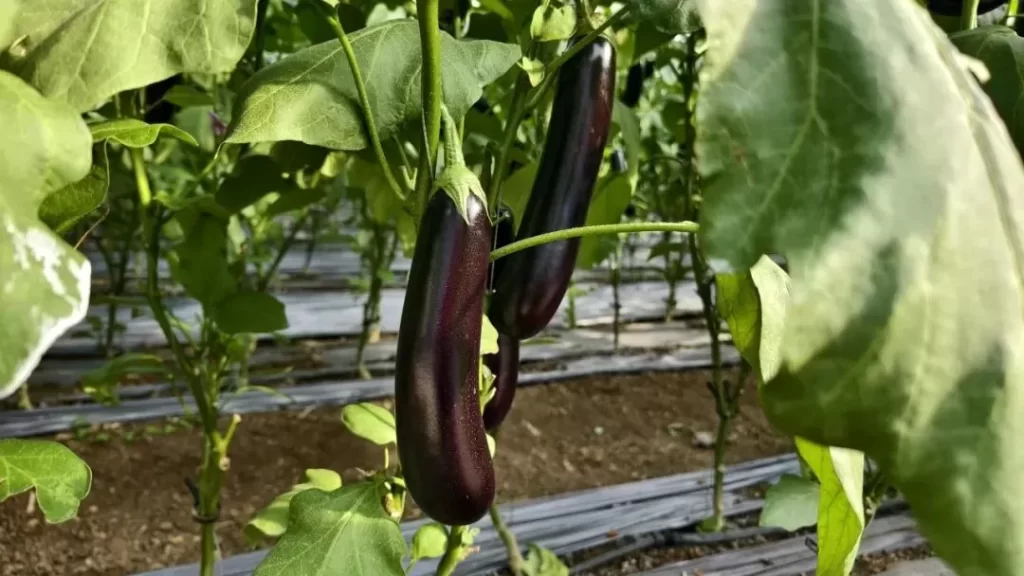
Single and double stem systems are pruned after branching. Triple stem systems are pruned at first flower. Renewal pruning follows late-season weakness. Whichever system you run, sharpen the blade between plants, since eggplant diseases spread easily on cutting tools.
For a full nutrition plan to match the pruning schedule, see our functional specialty fertilizer range. Water and nutrient management in vegetable production follows the same principles set out in FAO guidance on soil fertility. You can also contact our export team through the chat icon at the bottom right of this page.