
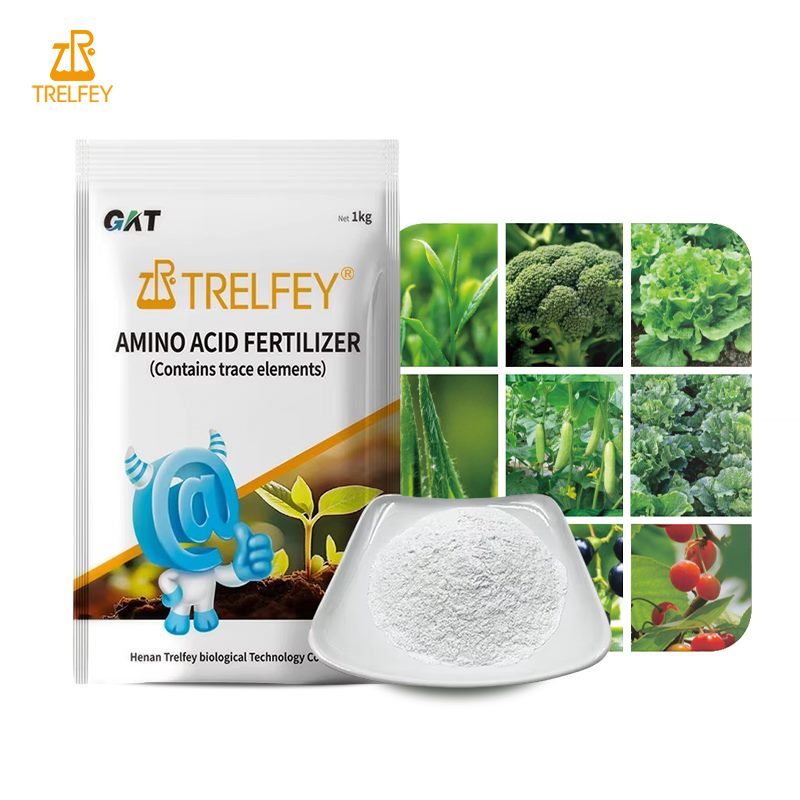
An amino acid fertilizer does more than feed the plant. By chelating micronutrients, amino acids carry iron, zinc, manganese and copper into the crop far more efficiently than inorganic salts alone. For tomatoes, avocados and grapes – crops where a single micronutrient gap cuts pack-out – that difference shows up directly in yield and shelf life.
What Is an Amino Acid Fertilizer?
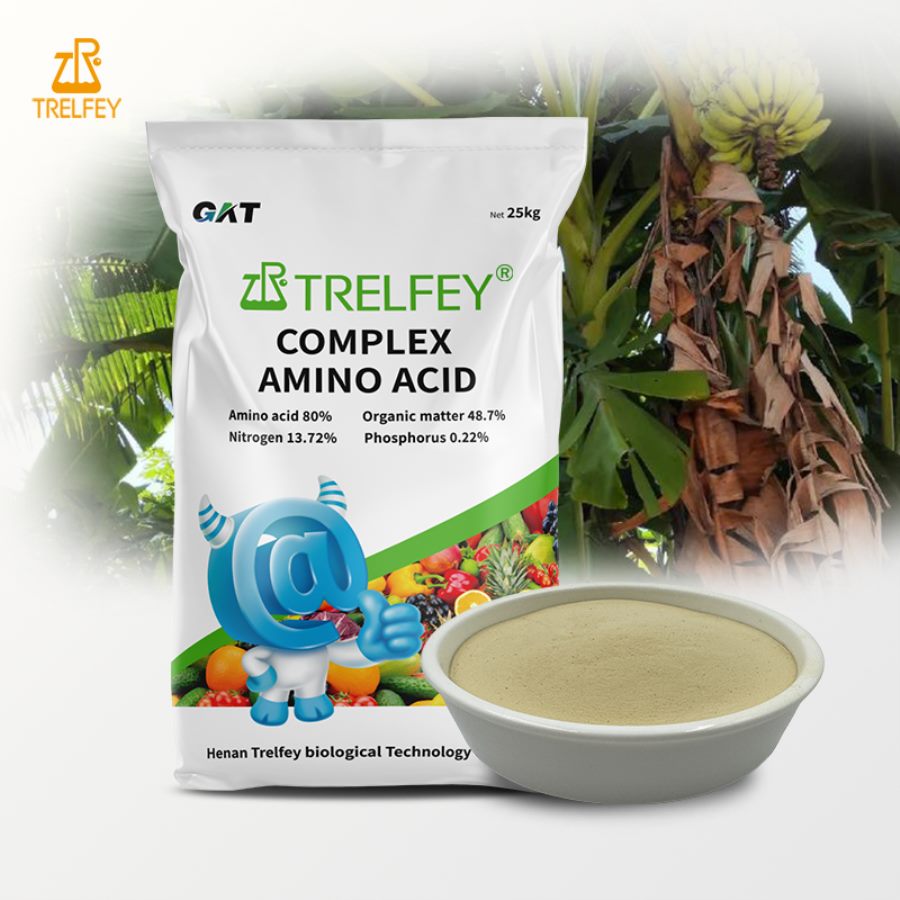
Amino acid fertilizers are produced by hydrolysing protein sources into free amino acids, then blending them with NPK or micronutrients. Depending on the target crop the same base can be formulated as a foliar liquid, a soluble powder or a fertigation input. Our amino acid + trace element liquid and compound amino acid powder lines follow this logic: carrier + chelating power + the exact micronutrient package the crop needs.
How Amino Acids Chelate Micronutrients
Micronutrients like Fe and Zn are easily locked out in high-pH or calcareous soil. Amino acids surround the metal ion and form a stable, water-soluble chelate that stays available at the root surface and through the leaf cuticle. The result is faster correction of deficiency symptoms and lower risk of phytotoxicity compared with high-rate sulphate sprays.
Why High-Value Crops Respond
Tomato blossom-end rot, avocado tipburn and grape shot berries are classic trace-element failures. Foliar amino acid programs applied at flowering and fruit set deliver micronutrients exactly when cell division is most active. Growers in Latin America and Africa are standardising on chelated amino acid blends for export-grade produce programmes, where cosmetic quality decides the price tier.
Foliar vs Soil Application
Foliar spraying suits fast correction: small molecules pass the cuticle within hours. Soil or fertigation application builds long-term availability, especially when the root zone is saline or compacted. Many programmes combine both, using the foliar pass to bridge the gap while soil-applied amino acids rebuild cation exchange capacity.
What to Check When Sourcing
- Protein source and hydrolysis method – they determine free amino acid profile and biostimulant effect.
- Whether the micronutrients are genuinely chelated or simply blended.
- Batch documentation: request the same discipline you apply to NPK, starting with how to read a COA.
- Consistent specs across seasons – your foliar program depends on repeatability, not one lucky batch.
For background on global food systems and crop nutrition research, the Food and Agriculture Organization publishes open agronomy references.
Follow Trelfey on Facebook for field trial results, new formulations and export updates: Trelfey on Facebook.